Anthropic took a swing at the design software market, and it landed hard enough that Figma noticed.
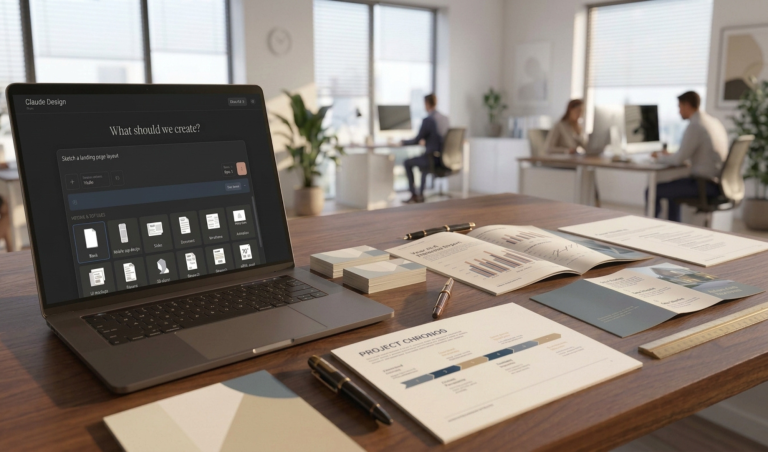
On April 17, 2026, Anthropic launched Claude Design, a new tool that turns a text prompt into a polished prototype, slide deck, one-pager, or mockup, no Figma license or design background required. Describe what you want, and Claude builds a first version you can refine with edits and follow-up requests. The timing was not subtle either: Anthropic’s Chief Product Officer resigned from Figma’s board three days before the launch, and the announcement was enough to move Figma’s stock.
It is early, since Claude Design is a research preview rather than a finished product, and it is not replacing a professional design team’s workflow yet. But for the businesses we work with, most of which do not have a design team at all, it is already useful. Here is how it maps onto the industries we serve.
The Real Upgrade: One Design System, Every Output
The single most useful feature is not the first draft, but what happens after it. You can build a design system once: your colors, fonts, logo, and layout rules. Then, every deck, one-pager, or mockup you generate afterward automatically matches it. In a major update Anthropic shipped in June 2026, that design system also hands off cleanly to Claude Code, so a mockup can become a real, working page without anyone rebuilding it from scratch.
One finance-focused demo showed the idea well. From a single project folder holding a company’s financials and one saved design system, it built:
- A publication-ready year-end report with commentary and matching imagery
- A board presentation with animated charts
- An interactive dashboard for drilling into the numbers
All three came out looking like they came from the same team, because they did, just without a designer touching any of them. That is the pattern worth borrowing regardless of your industry: set up your brand once, and stop rebuilding it for every new document.
Claude Design by Industry
| Industry | What Claude Design Builds | Example Uses |
|---|---|---|
| Legal | Client-facing one-pagers and case materials | A plain-language settlement explainer; a case timeline graphic for a client meeting |
| Accounting | Client decks and year-end materials | A year-end review deck built from your firm’s actual numbers; a service one-pager for new client onboarding |
| Healthcare | Patient education and practice materials | A handout explaining a new procedure; a one-pager breaking down a billing or prior authorization process |
| Manufacturing | Safety materials and spec sheets | A shift-change safety infographic; a product spec one-pager for a new customer |
| Construction | Bid decks and project materials | A pitch deck with before-and-after renderings; a subcontractor bid comparison laid out visually instead of buried in a spreadsheet |
| Logistics | Process graphics and service materials | A client-facing graphic showing how a shipment moves through your network; a one-pager comparing carrier service levels |
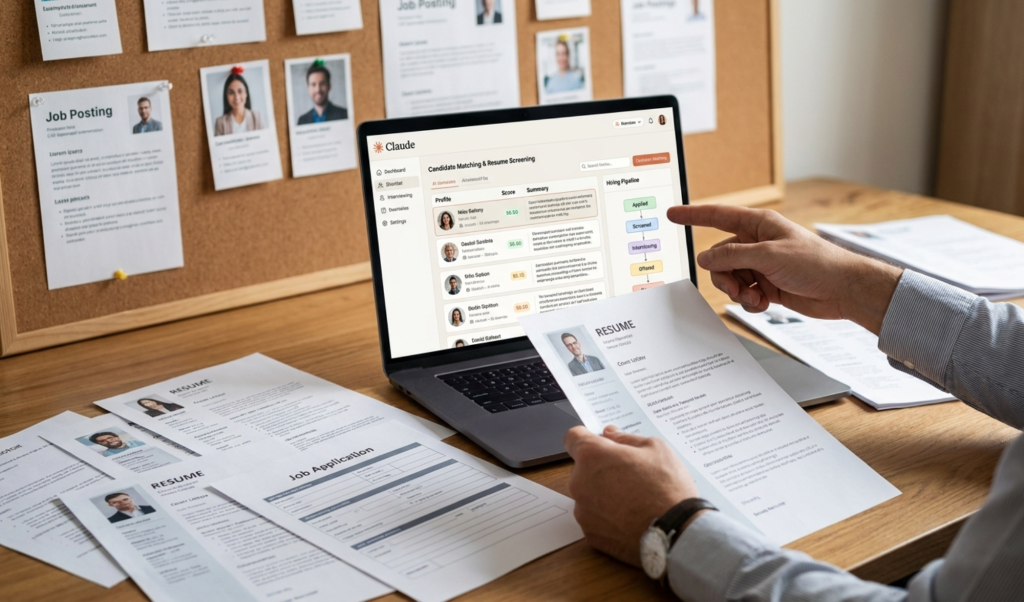
| Staffing | Job materials and client decks | A polished role brief that stands out from a plain job post; a capabilities deck for a new client pitch |
Where It Genuinely Helps
The businesses getting the most out of this are the ones without an in-house designer, which describes most small and mid-sized companies. A proposal deck, a client handout, or a quick mockup of a new process used to mean hiring out or living with a plain Word document. Now it is a prompt and a few rounds of edits.
Try this prompt: “Create a one-page client handout explaining [your process or service] in plain language, with a clean layout and our brand colors of [colors].” Once you have something you like, you can export it as a PPTX or send it straight to Canva to keep editing.
One tutorial walkthrough made the point clearly: a vague prompt gets a generic result, every time. A strong prompt tells Claude four things:
- The goal (what the piece needs to accomplish)
- The layout (what sections or structure it should follow)
- The content or brand voice (what it should sound and feel like)
- The audience (who it is actually for)
Give it those four things up front, and the first draft comes back noticeably closer to something you would actually use.
The Bottom Line
Claude Design will not replace your design team if you have one, but if you do not, it closes a real gap: a professional-looking deck or handout in minutes instead of days.
Where GiaSpace Fits
We help small to medium sized businesses figure out which new AI tools are actually worth adopting, and set them up the right way once they are. If you want a second opinion on whether Claude Design fits your workflow, that is where we come in.
→ Schedule a Free Assessment with Rob Giannini, our CEO and AI specialist