In 2026, logistics is no longer a game of who has the biggest trucks. It is a game of who has the best data. The days of dispatchers staring at whiteboards and drivers manually logging ETAs into outdated portals are over. If your logistics firm is still relying on gut feelings and Excel spreadsheets to manage a global supply chain, you are not just behind. You are becoming obsolete (and nobody wants to be the Blackberry of the trucking world).
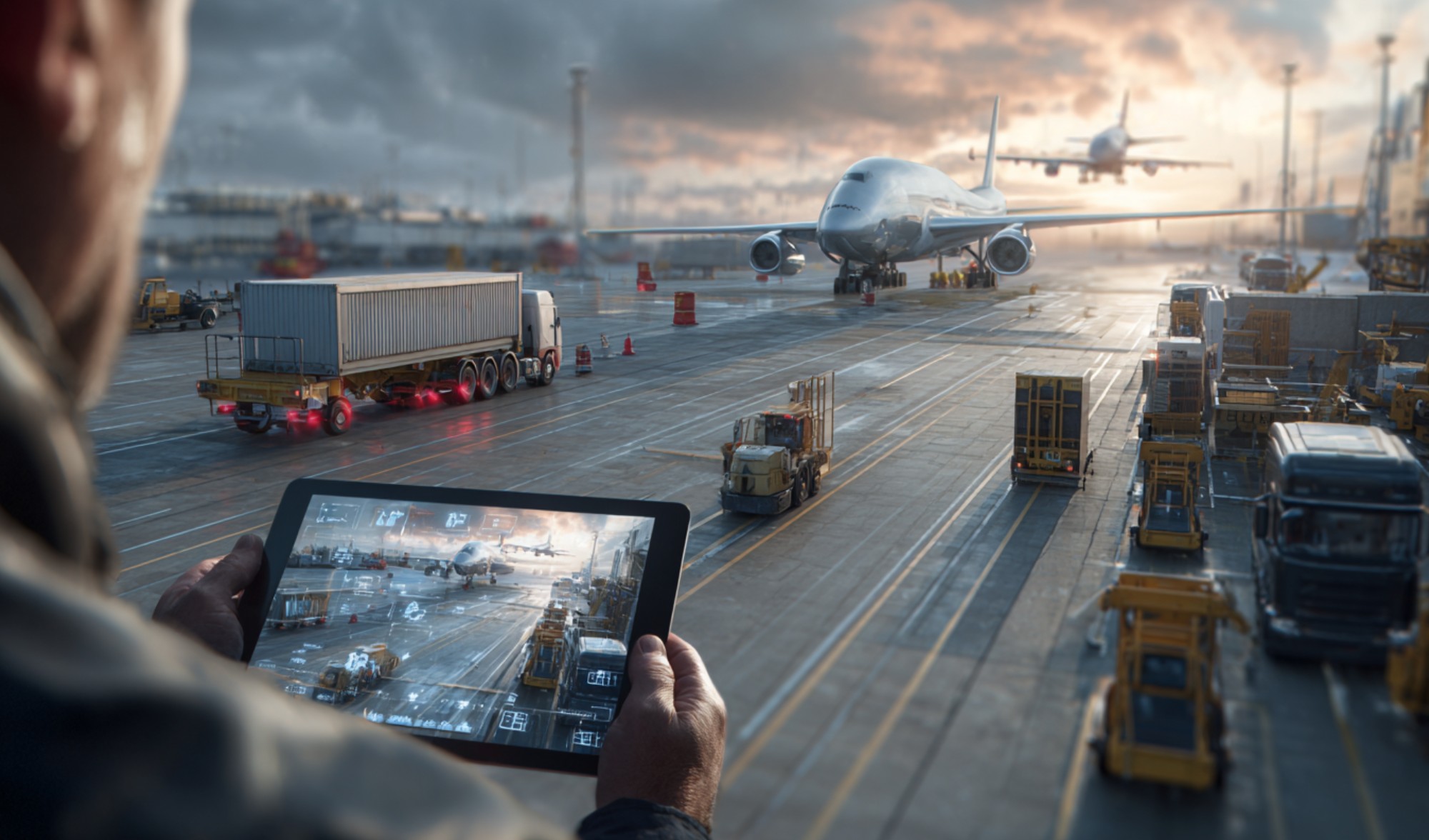
The 5 AI Tools Changing Logistics
1) AI Route and Load Optimization
Tools: Optym, Route4Me, Wise Systems
AI analyzes traffic patterns, weather, window of delivery constraints, and vehicle capacity in real time to build the most efficient route possible. Unlike traditional GPS, these tools learn from driver behavior and historical delays to predict the actual time on the road.
-
Real example: A mid-sized distribution company used Wise Systems to automate their last mile delivery scheduling. They saw a 15% increase in on time deliveries and a 10% reduction in fleet mileage. It turns out that having an AI recalculate routes every 60 seconds is more effective than a dispatcher trying to beat the traffic at 8:00 AM (while drinking their third cup of coffee).
-
Cost: $50 to $150 per vehicle per month.
2) Autonomous Warehouse Orchestration
Tools: 6 River Systems, Locus Robotics
These are not just robots. They are AI powered collaborative units (cobots) that guide warehouse workers through the most efficient picking paths. The AI predicts high demand items and suggests inventory placements to minimize travel time across the warehouse floor.
-
Real example: Major 3PL providers like DHL have now surpassed 500 million picks using AI bots. By letting the AI handle the walking and the humans handle the picking, they reduced employee fatigue (because humans were never meant to walk 12 miles a day on concrete floors).
-
Cost: $2,000 to $5,000 per month (often offered as Robots as a Service).
3) Real Time Predictive Visibility
Knowing where a shipment is isn’t enough anymore. You need to know when it will be there. These platforms use AI to aggregate data from port authorities and weather sensors to provide a High Probability ETA that is 95% accurate.
-
Real example: A global manufacturer using FourKites reduced their dwell time (trucks sitting idle at the dock) by 15%. Because the AI accurately predicted a 4 hour delay at the port, the warehouse rescheduled the labor shift before the workers clocked in to wait for a truck that was not coming.
-
Cost: Volume based pricing, typically starting at $1,000+ per month for enterprise tracking.
4) AI Freight Matching and Dynamic Pricing
For brokers and carriers, AI powered digital freight matching eliminates the need for endless check calls. The AI scans thousands of loads and matches them to the right carrier based on equipment type, lane history, and real time pricing trends.
-
Real example: A Florida based brokerage used Parade to automate their carrier outreach. They went from booking 10% of their loads digitally to over 50% in six months. This allowed their team to focus on high margin enterprise accounts instead of spending 6 hours a day dialing carriers for commodity lanes (a task that is about as fun as watching paint dry).
-
Cost: $500 to $2,500 per month depending on brokerage volume.
5) Predictive Supply Chain Risk Intelligence
Tools: Everstream Analytics, Altana
These tools act as a crystal ball for your supply chain. AI monitors global events like strikes, canal blockages, or political unrest to flag risks to your specific shipments weeks before they happen.
-
Real example: During a major port strike in 2025, companies using Everstream were able to reroute shipments to alternative inland hubs three days before the strike was even officially announced. They secured capacity while their competitors were still waiting for a news update (and probably crying into their logistics manuals).
-
Cost: Typically $2,000+ per month for comprehensive risk monitoring.
Why You Can’t Use AI Yet (The Data Logjam)
We see it every week. A logistics company wants to implement AI, but their data is a mess.
If your driver logs are in one system, your fuel receipts are in another, and your customer special instructions are buried in a PDF from 2019, AI won’t help you. It will just make your mistakes happen faster. To get AI Ready, you need:
-
Unified TMS (Transportation Management System): All shipment data must live in one source of truth.
-
API First Connectivity: Your systems must be able to talk to your partners without manual data entry (because nobody has time for more typing).
-
Clean Historical Data: AI needs to see at least 6 to 12 months of clean data to start making accurate predictions.
-
Real Time Hardware: If your fleet is not equipped with modern ELDs and IoT sensors, the AI is essentially flying blind.
Is Your Logistics IT Ready for 2026?
The difference between a “profitable” year and a “breaking even” year in logistics often comes down to cents-per-mile. AI is the tool that finds those cents.
We help logistics providers and 3PLs audit their current IT stacks to ensure they have the “data highway” necessary to run these AI tools.
→ Schedule a free Logistics IT Assessment with GiaSpace today.
Want to learn more about our AI & automation services?
→ Check out our AI & Automation page
Published: Feb 17, 2026
Need IT Support for Your Florida Business?
GiaSpace provides proactive managed IT services, cybersecurity, and local tech support across Florida — with teams in Gainesville, Fort Lauderdale, Jacksonville, and Ocala.
Managed IT Services FloridaCybersecurity Services FLGainesville IT ServicesFort Lauderdale IT Services